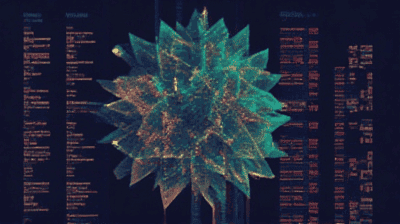
In recent years, large language models (LLMs) like ChatGPT have transformed the field of artificial intelligence, revolutionizing the way we interact with technology. These models are capable of generating human-like text, answering questions, assisting with creative writing, and even engaging in meaningful conversations. But how do these sophisticated systems actually work?
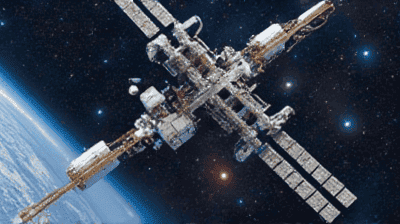
For over two decades, the International Space Station (ISS) has been a pinnacle of human achievement in space exploration. As a laboratory, observatory, and factory, the ISS has allowed researchers to conduct critical scientific experiments in microgravity, paving the way for advances in numerous fields. However, as we look to the future, it becomes clear that the landscape of space habitats is evolving. The rise of private companies, international partnerships, and groundbreaking technologies is set to red
In our fast-paced world, technology is evolving at lightning speed, with innovations reshaping the way we interact with devices. One of the most exciting frontiers in this realm is flexible electronics, a field that promises to revolutionize the design and functionality of consumer gadgets. From bendable smartphones to wearable technology, flexible electronics are set to transform our daily lives in ways we have only begun to imagine.
In recent years, artificial intelligence has made significant strides in creative fields, particularly in generating art. One of the most exciting developments in this area is the use of diffusion models to create stunning images from textual descriptions. This innovative approach allows for the synthesis of visuals that not only reflect the content of the provided text but also demonstrate artistic flair and complexity.
Artificial intelligence represents one of the most exciting frontiers of science and technology today. As researchers and engineers develop increasingly sophisticated neural networks, a compelling question arises: How closely do these artificial systems mirror the workings of the human brain?
The prospect of human exploration of Mars has fascinated scientists, engineers, and space enthusiasts for decades. However, one of the major challenges of sending humans to Mars is the time it takes to travel the vast distance between Earth and the Red Planet. Current chemical propulsion systems require several months to make the journey, raising concerns about the health and safety of astronauts during prolonged space flights. One potential solution to this problem lies in nuclear propulsion technology.
The dream of hypersonic flight, defined as traveling at speeds greater than Mach 5 (about 3,800 miles per hour or 6,100 kilometers per hour), has captured the imagination of engineers, scientists, and the public alike. The ambition to break barriers in air travel not only promises significantly reduced travel times across the globe but also opens avenues for revolutionary advancements in military and space applications. However, achieving hypersonic speeds presents formidable engineering challenges, particu